
Bodies corporate in Queensland play a critical role in managing and maintaining shared residential, commercial and mixed‑use properties. These responsibilities extend far beyond administrative and financial functions and include a significant duty to ensure the safety and wellbeing of residents, visitors, contractors, and other lawful occupants. Safety and fire safety are particularly important in community titles schemes due to shared infrastructure, high occupancy levels, vulnerable occupants, and complex building services. Legislative compliance is not only a legal requirement but also a fundamental component of responsible governance and risk management.
Queensland has comprehensive regulatory framework governing body corporate safety responsibilities, including the Building Fire Safety Regulation 2008, the Fire Services Act 1990, and, where applicable, the Work Health and Safety Act 2011. Collectively, these laws establish clear requirements for maintaining safe environments, preventing incidents, and ensuring preparedness for emergencies. Failure to comply can have serious legal, financial, and human consequences. Consequently, safety and compliance must be central priorities for all bodies corporate in Queensland.
Governance Responsibilities of Bodies Corporate
Under the Body Corporate legislation, a body corporate is responsible for administering, managing, and controlling common property and body corporate assets for the benefit of lot owners. This includes an obligation to maintain common property in good condition. Safety is an inherent component of this obligation, as poorly maintained infrastructure can present hazards and expose occupiers, workers and visitors to injury or harm.
The Body Corporate legislation also establishes behavioural obligations that prohibit nuisances or hazards on common property. Occupiers must not use lots or common property in a way that creates a hazard or interferes unreasonably with the safety of others. These provisions reinforce the importance of proactive hazard identification and risk management by the body corporate and its committee.
Committee members have a duty to act in the best interests of the body corporate and to understand the legislative framework in which they operate. In practice, this means ensuring that safety and fire compliance are treated as core governance issues rather than optional or reactive tasks. Professional advice, regular inspections, and structured compliance programs are essential to meeting these obligations.

The Critical Role of Fire Safety in Multi‑Residential Buildings
Fire safety is one of the most heavily regulated areas affecting bodies corporate in Queensland, reflecting the potentially catastrophic consequences of fire incidents in multi‑storey and high‑occupancy buildings. The Building Fire Safety Regulation 2008 (BFSR) establishes minimum standards designed to ensure occupants can evacuate safely and quickly and that fire safety installations are properly maintained.
Multi‑residential buildings present unique fire risks due to shared evacuation routes, internal fire separations, and reliance on collective fire safety systems such as alarms, sprinklers, and smoke control. Residents may include children, elderly persons, or individuals with mobility impairments who require additional consideration in emergency planning. Effective fire safety management is therefore essential to protect life and reduce the risk of injury or fatality in an emergency.
Queensland’s strict fire safety framework has contributed to low rates of fire‑related deaths in regulated buildings, demonstrating the importance of consistent compliance and enforcement. Bodies corporate are central to this system, as they act as the managing entity for residential schemes and common areas.
Fire Safety Obligations Under Queensland Law

The Building Fire Safety Regulation 2008 places specific responsibilities on building occupiers and managing entities, including bodies corporate. These obligations apply to most class 2 to class 9 buildings, including residential apartment buildings, short‑term accommodation, and mixed‑use developments. Stand‑alone houses are generally exempt, but most community titles schemes fall squarely within the regulation’s scope.
Key annual fire safety obligations include:
- Maintaining all prescribed fire safety installations in accordance with the Queensland Development Code and relevant Australian Standards
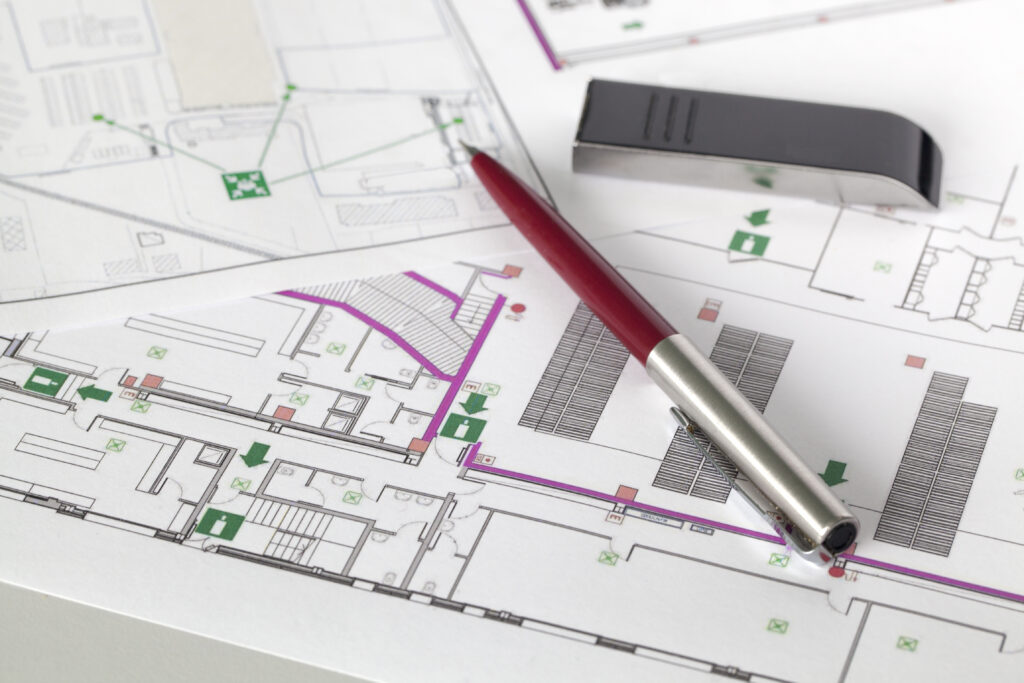
- Preparing, reviewing, and displaying a Fire and Evacuation Plan and evacuation diagrams
- Ensuring clearly defined and unobstructed evacuation routes
- Appointing and training responsible persons and evacuation coordinators
- Conducting evacuation practices at least once every year
- Completing and retaining an annual occupier’s statement confirming compliance
These measures are designed to ensure both physical systems and human responses are effective in an emergency. Failure in either area can undermine the entire fire safety strategy.
High‑occupancy buildings have additional requirements, including the appointment of a qualified Fire Safety Adviser. This role provides expert oversight of fire safety planning, training, and compliance, particularly in buildings with complex risk profiles or higher occupant loads.
Emergency Planning and Evacuation Readiness
Fire safety is not limited to equipment maintenance; it also depends on effective emergency planning and occupant preparedness. The BFSR requires comprehensive Fire and Evacuation Plans that address evacuation procedures, roles and responsibilities, communication methods, and the needs of persons with disabilities or special requirements. These plans must be reviewed at least annually and updated when building conditions or occupancy change.
Evacuation practice exercises are a critical component of compliance and safety culture. Regular exercises help residents understand evacuation routes, recognise alarms, and respond calmly in an emergency. They also allow the body corporate to identify weaknesses in procedures, signage, or communication. Although not all residents are required to participate, reasonable efforts must be made to conduct exercises when occupancy levels are representative.
The presence of clear, correctly oriented evacuation diagrams and signage in common areas further reinforces preparedness and reduces confusion during high‑stress situations. These seemingly simple measures can significantly influence outcomes during real emergencies.
Work Health and Safety Considerations
In addition to fire‑specific legislation, bodies corporate must consider their obligations under the Work Health and Safety Act 2011 (WHS Act). While a purely residential body corporate without employees may not be classified as a person conducting a business or undertaking (PCBU), WHS duties can still arise in certain circumstances. These include engaging contractors, managing high‑risk plant, or operating mixed‑use buildings with commercial components.
Where WHS obligations apply, bodies corporate must take reasonable steps to identify hazards, assess risks, and implement controls to protect workers and other persons in the workplace. Common WHS issues include slips and trips on common property, unsafe electrical or mechanical plant, inadequate lighting, and poor traffic management in car parks.
Even where the WHS Act does not strictly apply, the obligations under the BCCM Act to maintain common property in good condition effectively create a parallel duty to manage safety risks. Proactive safety inspections and documented corrective actions demonstrate prudent management and reduce liability exposure.
Consequences of Non‑Compliance
Failure to comply with safety and fire safety legislation can have severe consequences for bodies corporate. Regulators such as the Queensland Fire Department have powers to issue notices, infringement fines, and compliance orders. Serious breaches may lead to prosecution, court orders, or compulsory remedial works.
From a civil liability perspective, inadequate safety management can expose a body corporate to claims for personal injury, property damage, or loss resulting from fires or other incidents. Insurance policies may be invalidated or reduced where non‑compliance is identified, leaving owners financially exposed. Reputational damage and increased insurance premiums are also common consequences.
Most importantly, non‑compliance places lives at risk. Fires in residential buildings can spread rapidly, and failures in alarm systems, evacuation routes, or training can result in serious injury or loss of life. These risks underscore why safety compliance must be treated as an ethical responsibility, not merely a regulatory burden.
Building a Culture of Safety and Compliance
Effective safety and fire safety management requires more than annual checks and minimum compliance. It demands a culture of awareness, accountability, and continuous improvement. Bodies corporate that adopt structured compliance programs—supported by professional consultants, regular audits, and clear documentation—are far better positioned to manage risk and respond effectively to incidents.
Safety should be a standing agenda item at committee meetings, and owners should be informed about their roles in maintaining safe conditions, such as keeping balconies clear, not modifying fire doors, and complying with evacuation procedures. Education and communication are essential to embedding safety as a shared responsibility across the scheme.
Engaging qualified fire safety professionals, building consultants, and body corporate managers helps ensure compliance with evolving legislation and technical standards. As regulations change and buildings age, professional input becomes increasingly important to sustain long‑term safety outcomes.
Safety, fire safety, and legislative compliance are foundational responsibilities for bodies corporate in Queensland. Through the BCCM Act, fire safety legislation, and WHS framework, Queensland law clearly places the onus on bodies corporate to manage risks, protect occupants, and maintain buildings in a safe condition. Compliance is not simply about avoiding penalties; it is about safeguarding lives, preserving property, and fulfilling the trust placed in bodies corporate by lot owners and residents.
By prioritising proactive safety management, adhering to fire safety requirements, and fostering a culture of compliance, bodies corporate can meet their legal obligations while creating safer, more resilient communities. In an environment where shared living is increasingly common, the importance of diligent safety governance cannot be overstated.